
Product Features:
| Feature | Details |
|---|---|
| Size | 16 cm, 18 cm, 20 cm, 23 cm |
| Length | Varies per size (16-23 cm) |
| Shape | Straight |
| Tip Type | Atraumatic, Rounded |
| Material | High-Grade Stainless Steel |
| Use Case | Surgical, Gynecological, Veterinary, General Surgery |
| Sterilization | Autoclave Compatible |
What are Babcock Forceps?
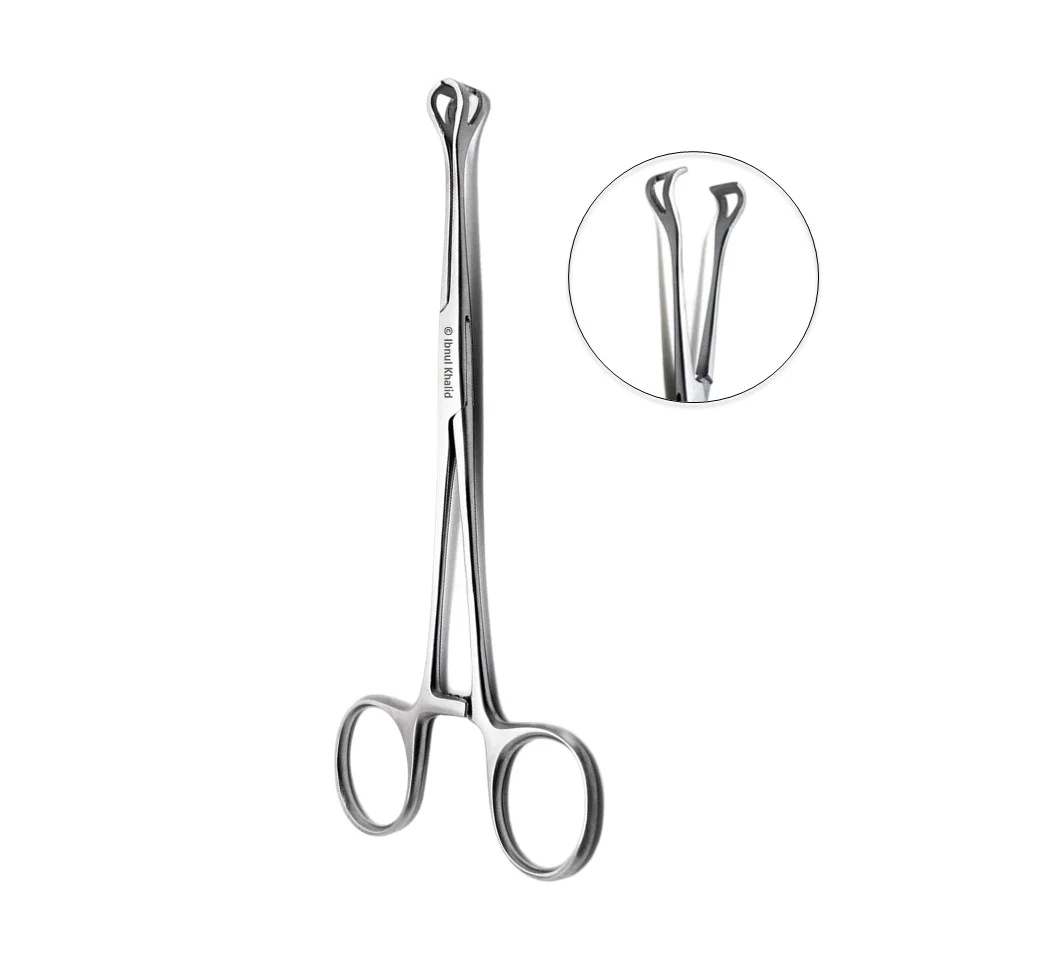
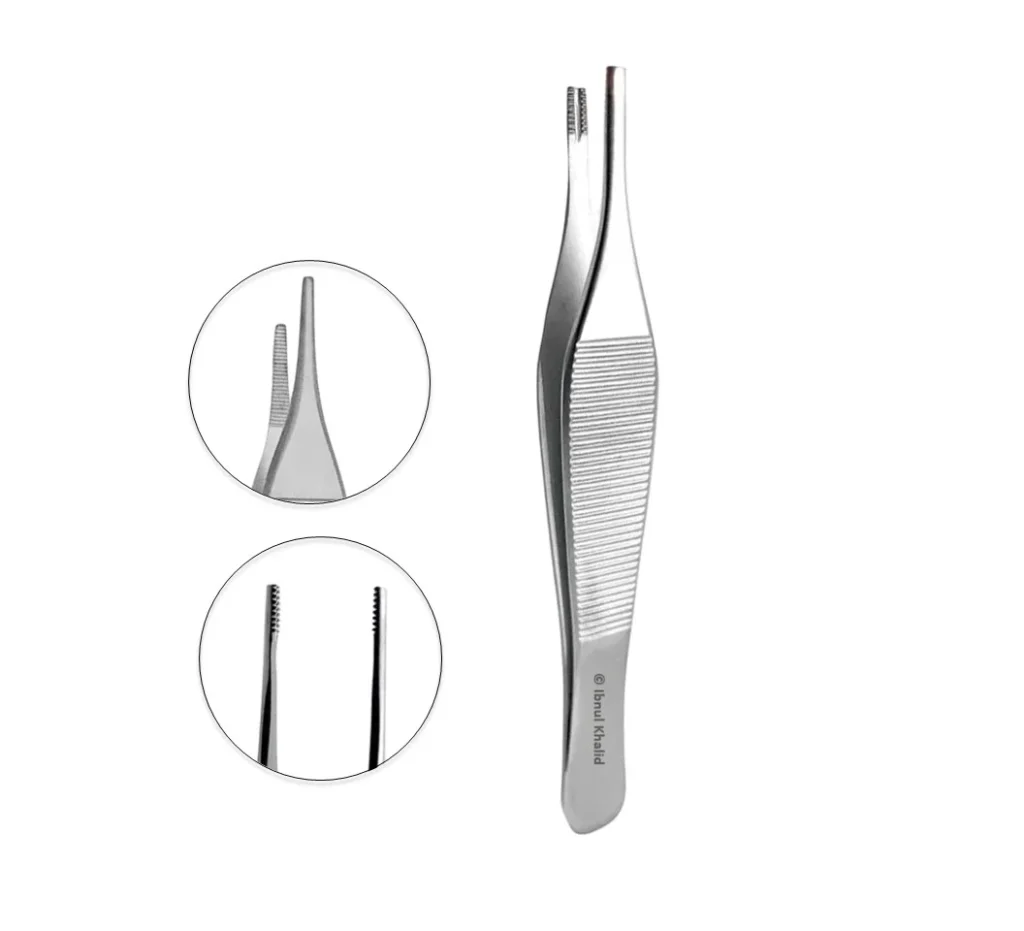
These Forceps refer to particular types of surgical instruments that are used for holding and grabbing soft tissues without causing harm during operations. They differ from hemostatic forceps because instead of being toothed or having some sort or projection, they are plain and fenestrated thus making gentle circular contact with tissue without damaging it.
Who Utilizes Babcock Forceps?
These forceps find utility among a diverse group of professionals such as:
- General Surgeons: for soft tissue handling.
- Gynecologists: perform procedures such as tubal ligation and ovarian surgery.
- Veterinarians: whenever they handle fragile tissues from animals.
- Urologists: in laparoscopic and open surgeries.
- Gastroenterologists: in laparoscopic and open surgeries.
What Is The Use Of These Forceps?
Some of the uses include but not limited to:
- They can be used to hold soft tissues e. g., intestines, stomach, fallopian tubes, etc
- It is employed in grasping fragile tissues in the course of bowel and bladder surgery
- It serves the purpose of traumatically handling instruments in veterinary and gynecological practices
- They help increase visibility during most laparoscopic surgeries
When Can Forceps Babcock Be Used?
In both open and laparoscopic non-crushing tissue manipulating surgeries, Babcock Forceps are applicable tools. They are preferable in operations that require the preservation of tissue structure integrity.
Where Are These Commonly Found And Where Are They Used?
These instruments can typically be found in:
- Various procedures are carried out at hospitals and surgical centers.
- Surgical procedures on small and large animals in veterinary clinics.
- OB-GYN applications within Gynecological Practices.
Why Should One Know About Babcock Forceps?
The Babcock forceps stand out from the rest due to their fenestrated blunt jaws that minimize injury on tissues. For this reason, they are very good at handling delicate tissues because they prevent applying too much pressure which would otherwise cause injury or harm.
How Do These Instruments Operate?
Their operation is based on a squeezing mechanism similar to that of scissors but includes an additional feature known as a ratchet lock for maintaining grip strength while leaving tips free from any crushing pressure hazard associated with conventional types of air/water syringe tips.
Additional:
For more information regarding the product and how it can be used to determine its attributes, you may visit Facebook, Pinterest, or Wikipedia.
In addition, we have Forceps which are meant for effective surgery and are of high quality.
Frequently Asked Questions (FAQs):
Q. What is a Babcock Forcep used for? |
|---|
| A: Babcock Forcep is used for atraumatic grasping of delicate tissues like intestines, fallopian tubes, and soft organs during surgeries. |
Q. How do Babcock Forceps differ from Allis Forceps? |
| A: Unlike “Allis” Forceps, which have toothed jaws, “Babcock” Forceps have smooth, fenestrated tips to prevent tissue damage. |
Q. Can Babcock Forcep be used in veterinary surgeries? |
| A: Yes, they are commonly used in veterinary procedures for handling soft tissues in both small and large animals. |
Q. Are Babcock Forcep reusable? |
| A: Yes, they are made of autoclave-compatible stainless steel, allowing multiple uses after proper sterilization. |
Reviews
Clear filtersThere are no reviews yet.