
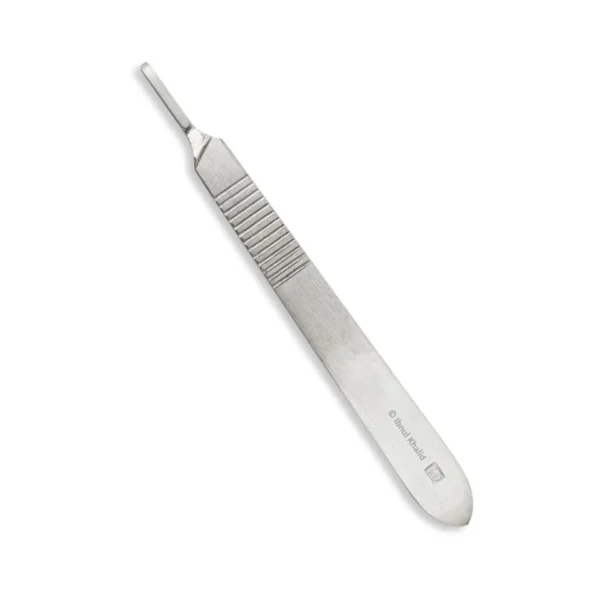
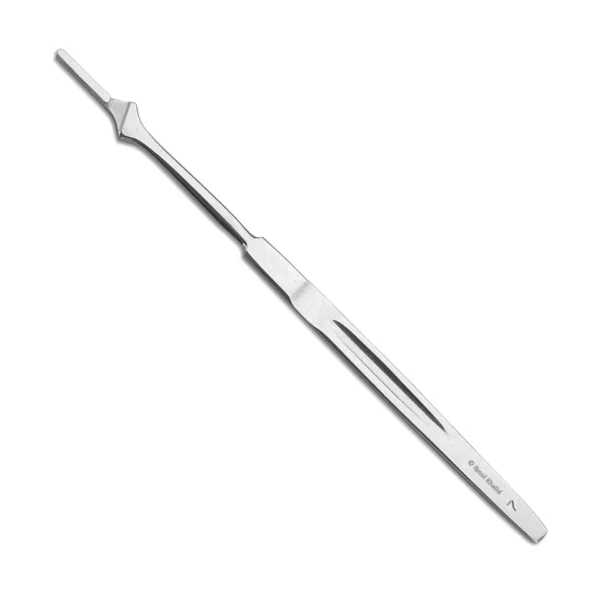
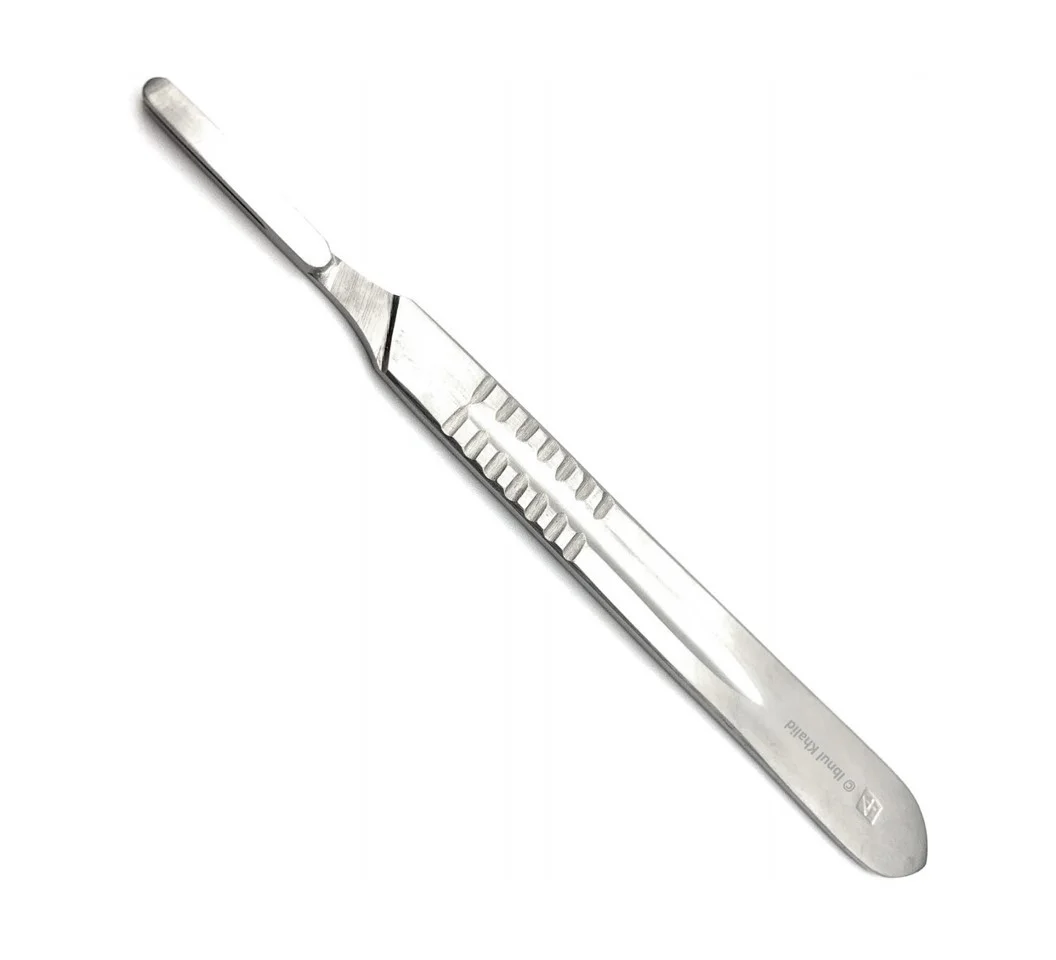
Features of Bard-Parker Scalpel Handle No 4:
| Attribute | Description |
|---|---|
| Size | Standard No 4 handle |
| Length | 13 cm (5.1 inches) |
| Width | 1.7 cm |
| Height | 0.5 cm |
| Shape | Straight |
| Tip Type | Slotted for secure blade attachment |
| Material | Medical-grade stainless steel |
| Use Case | General surgery, orthopedic surgery, veterinary, autopsy |
| Sterilization | Autoclave safe, reusable |
What is Bard-Parker Scalpel Handle No 4?
The Bard-Parker Scalpel Handle No. 4 refers to a surgical instrument that is designed to aid in holding and controlling the position of surgical blades with reliability. It is meant for the bigger blades mostly around numbers 20-25 hence very appropriate in making those deep cuts. This handle type is very popular and commonly used in routine surgery, orthopedic surgery as well as veterinary surgery.
Who Uses the Bard-Parker No 4 Scalpel Handle?
It is utilized by the following professionals:
- General Surgeons: Required in most surgeries for making big incisions.
- Orthopedic Surgeons: Indispensable tool in cutting through thick layers of flesh and operating upon bones.
- Veterinarians: Primarily employed during surgery conducted on large animals as well as autopsy of such animals.
- Pathologists: Useful when carrying out postmortem examinations and cutting up tissues.
- Medical Students & Trainees: They require it for surgical practice purposes.
Why Choose Bard-Parker No 4 Scalpel Handle?
- Compatible with larger blades: No: sizes 20, 21, 22, 23, 24, or 25.
- Firm and comfortable grip: Offering great control and accuracy.
- Stainless steel construction: Resistant to rust and last long.
- Reusable and cost-effective: Can be sterilized severally at low cost.
- Non-slip design: Offers maximum grip even during delicate procedures of surgery.
Where is the No 4 Scalpel Handle Used?
This product finds application within:
- Operating Theaters in Hospitals: Specially used during critical surgeries.
- Veterinary Hospitals: Commonly applied in large animal operations.
- Government Mortuaries & University Labs–Primarily for animal/human autopsy tissue cutting.
- Surgical Colleges: Vital instrument in giving lessons on surgery.
How Does the No 4 Scalpel Handle Work?
There is a slotted tip at one end of the no. This tip holds the blade so that it cannot easily fall off during use. The blade remains stable when fitted into a slot on the end; this prevents unnecessary movements while cutting. Its ergonomically fashioned grip reduces intraoperative hand exhaustion over prolonged periods by ensuring that it remains secure throughout the procedure.
Key Benefits of the Bard-Parker Scalpel Handle No 4
- Designed for Large Surgical Blades: Compatible with blades No 20-25.
- Enhanced Grip: Ensures stability and control during incisions.
- Medical-grade stainless Steel: Highly resistant to corrosion and rust.
- Autoclavable and Reusable: Safe for multiple uses with proper sterilization.
- Lightweight & Ergonomic: Reduces strain on the hand during prolonged procedures.
Maintenance & Sterilization Guidelines
- Cleaning: Wash using warm water mixed with mild soap immediately after use.
- Sterilization: Use an autoclave machine set at high temperatures for a thorough disinfection process.
- Storage: Keep under sterile conditions to ensure hygiene is maintained.
You can find out more about this product on Facebook, Pinterest, or Wikipedia.
Also, Check Out Our More Scalpel Handles Here.
Frequently Asked Questions (FAQs)
Q 1. What blades are compatible with Bard-Parker Scalpel Handle No 4? |
|---|
| A 1: This handle is compatible with larger blades, including No 20, 21, 22, 23, 24, and 25. |
Q 2. How do I sterilize a Bard-Parker Scalpel Handle No 4? |
| A 2: The handle can be autoclaved at high temperatures for complete sterilization. |
Q 3. Is Bard-Parker Scalpel Handle No 4 suitable for veterinary use? |
| A 3: Yes, it is widely used for large animal surgeries and post-mortem dissections. |
Q 4. Can this handle be used for orthopedic surgery? |
| A 4: Yes, orthopedic surgeons use this handle for procedures requiring deeper incisions. |
Reviews
Clear filtersThere are no reviews yet.