
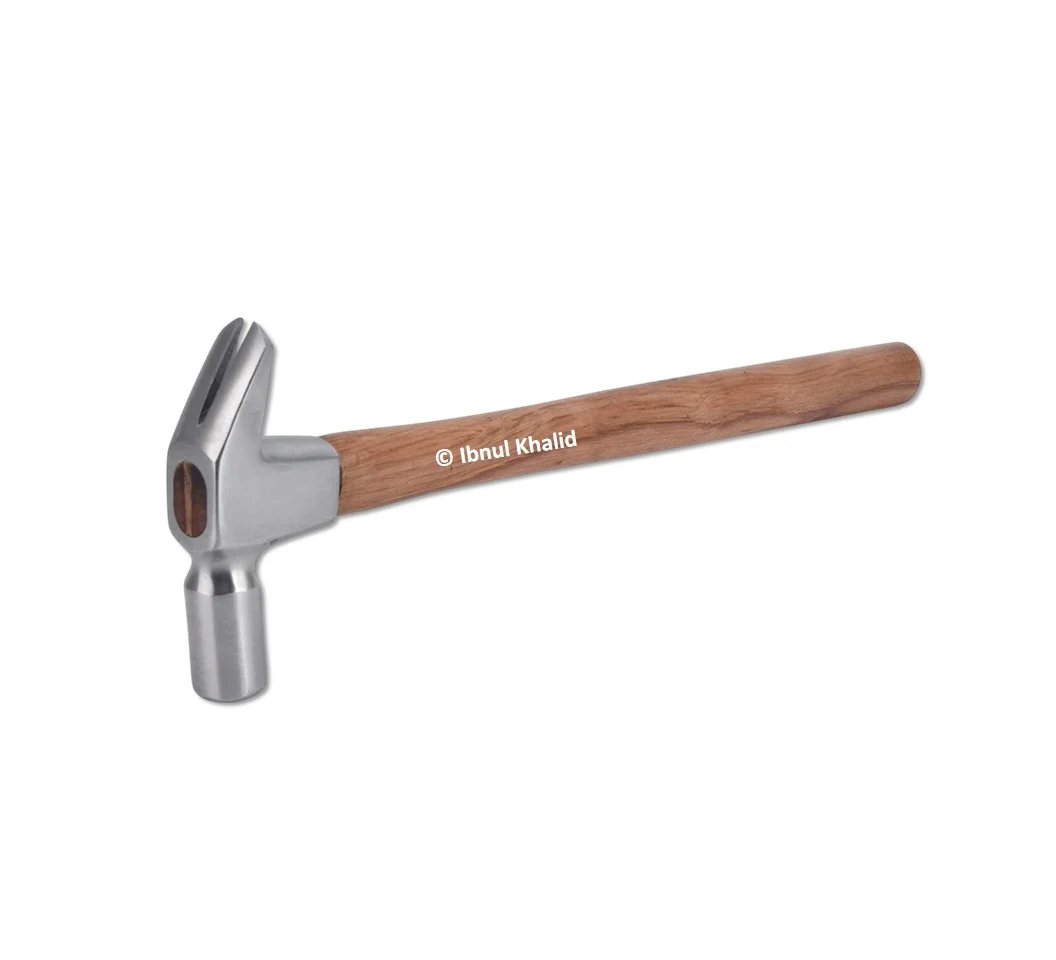
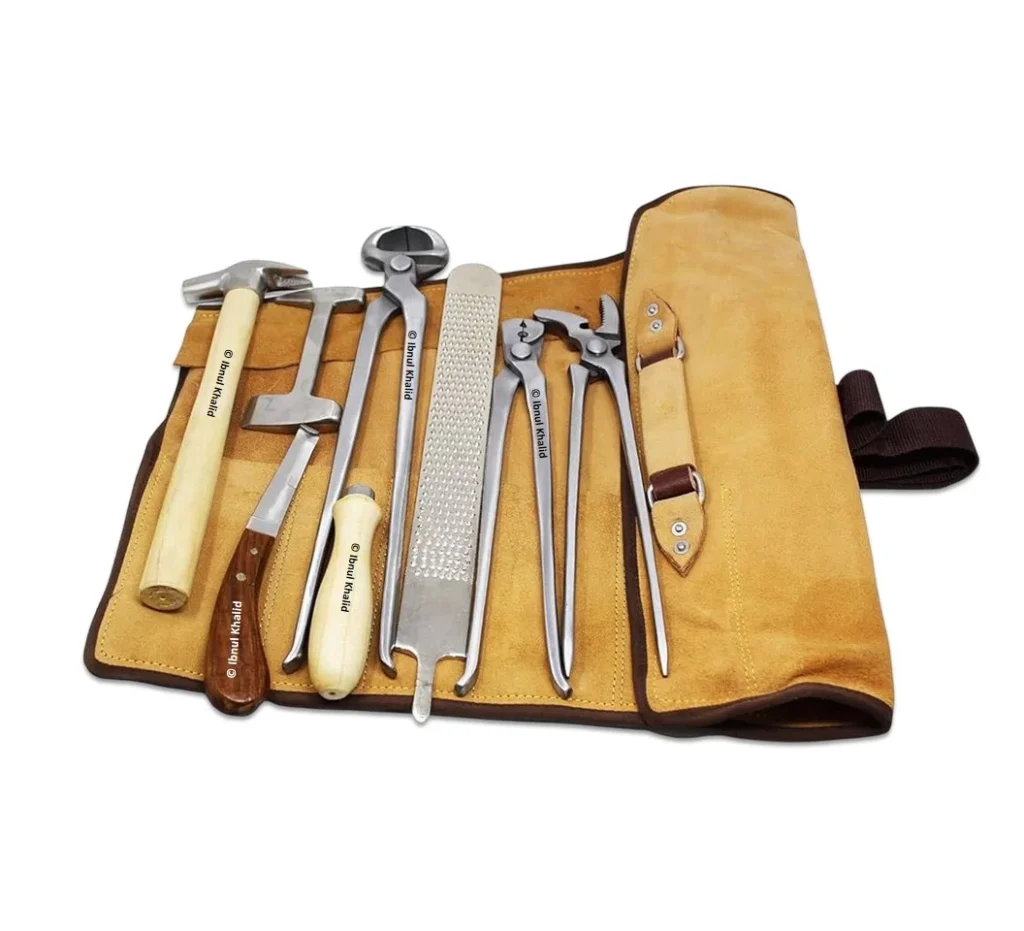
Farrier Hoof Hammer
| Attribute | Description |
|---|---|
| Size | Available 10 oz, 12 oz, 14 oz head versions |
| Length | Approx. 30 cm to 35 cm overall |
| Width | Hammer face ~3 cm diameter |
| Height | Head thickness ~2 cm |
| Shape | Dual-faced hammer: flat striking face and curved peen |
| Tip | Octagonal or flat face; tapered peen end |
| Material | Forged stainless or tool steel head; wooden or composite handle |
| Use Case | Reusable for driving horseshoe nails |
| Sterilization | Autoclave compatible if fully stainless; handle removable if needed |
Introduction
Farrier Hoof Hammer is really essential for horseshoeing. Farriers and veterinarians use it to drive nails securely and shape horseshoes just right. It has a nicely balanced dual-faced head– flat and peen. This design gives good control and leverage for precise shoe fitting.
Ibnul Khalid Industries makes each hammer from forged stainless steel or tool steel. You get handle options that support hygiene too, like autoclave-compatible designs or removable parts.
What Is a Farrier Hoof Hammer?
This farrier hoof hammer is truly specialized, especially when it comes to driving horseshoe nails, shaping shoes, as well as removing old ones while shoeing.
Its design often includes:
- A flat striking face for hammering nails flush.
- A peen end (straight or cross) used to shape or clinch metal.
- Professional models are balanced you see, to minimize vibration and arm fatigue.
- They deliver steady strikes with fewer misses.
Who Uses Farrier Hoof Hammer Tool?
- Professional farriers use it during horseshoe nailing and fitting.
- Veterinarians, Yep, for hoof repair or corrective shoeing too.
- Livestock farmworkers doing field shoeing tasks.
- Equine caretakers in trainers’ stables handling minor shoe adjustments.
- Mobile farriers need lightweight balanced hammers for efficiency.
What Materials Are Used?
Hammer head— it’s crafted from forged stainless steel or high-grade tool steel for real strength and longevity. Competitor hammers sometimes feature octagonal faces and slim profiles for control plus even impact distribution. Handles are made of hardwood or composite materials designed for grip and vibration dampening. Some models allow head removal for full autoclave sterilization.
When Should Farrier Hoof Hammer Be Used?
During horseshoe installation? Certainly, for driving nails through the hoof wall! Making minor shoe adjustments? Definitely– using the peen face to shape metal. For clinch finishing? Absolutely, shaping nail ends snug to the hoof wall!
Removing old nails or shoes? Of course, during corrective or routine work! In field or clinic settings? Yes, for veterinarians checking hoof conditions!
Where Is Farrier Hoof Hammer Used?
Farrier workshops and horseshoeing stations; Veterinary hospitals and hoof care clinics; Stable yards and boarding facilities; Mobile farrier and veterinary units; Training stables and equine performance centers
Why Is Farrier Hoof Hammer Important?
Farrier hammers really play a key role in horseshoeing. A well-balanced hammer gives accurate consistent strikes; this is essential for secure shoe placement and hoof integrity. Hammering with poor tools can cause nail misplacement hoof wall damage and user fatigue. Balanced drive hammers are known for reducing such risks improving process flow.
Removing or reshaping nails efficiently avoids damage to the hoof gives a better fit comfort too! A reusable stainless steel design ensures sterilization long-term hygiene in professional environments.
Working of the Horseshoe Hammer
- The grip: Hold the handle comfortably and firmly using one hand.
- Drive: Strike the heads of horseshoe nails with its flat face.
- This action helps embed them into the hoof wall getting them seated correctly is key!
- Shape or Clinch :Now use the peen side to bend those nail ends finishing so they lie nicely flush and secure.
- Remove :When removing shoes, some hammers also have a peen or claw for gently lifting out old nails.
Clean and Sterilize
- If the handle can come off, separate it from the head then sterilize everything in an autoclave.
- If not, just be sure to thoroughly clean and sterilize using methods vets recommend.
Why use a hammer like this?
- It helps put nails in just the right place; causes very little damage to the hoof; plus tools like these last a long time.
- tool categories including this hammer
- Farrier Shoeing Tools
- Veterinary Footcare Instruments
- Equine Shoeing Equipment
Who uses this tool?
- Farrier shoeing services and related practices
- Veterinary clinics dealing with hoof surgery and repairs
- Ranches and equine breeding farms too
- Mobile hoof care providers plus those offering field services
Additional:
For more information about the product and how it can be used to determine its attributes, visit Facebook, Pinterest, or Wikipedia.
In addition, we have Burdizzo Castrator 9 Inch, which is of high quality and autoclave compatible.
Frequently Asked Questions (FAQs)
Q. What is a farrier hoof hammer used for? |
|---|
| A: It drives horseshoe nails and helps shape and clinch nails safely during shoeing. |
Q. Why choose a dual-faced head? |
| A: The flat face handles driving nails; the peen face allows shaping and clinching without needing separate tools. |
Q. Is this tool stabilizable? |
| A:Yes. Many designs feature detachable heads that can be autoclaved. Non-detachable handles should be wiped clean and sterilized per clinic standards. |
Q. What hammer weight works best? |
| A: Common weights range from 10 to 14 ounces—lighter hammers offer control; heavier ones deliver more force. Farriers choose based on species and hoof hardness. |
Q. Can it be used on cattle hooves? |
| A:Yes, the hammer suits multiple livestock species when shoes or blocks are nailed on. |
Reviews
Clear filtersThere are no reviews yet.