
Table of Features
| Attribute | Description |
|---|---|
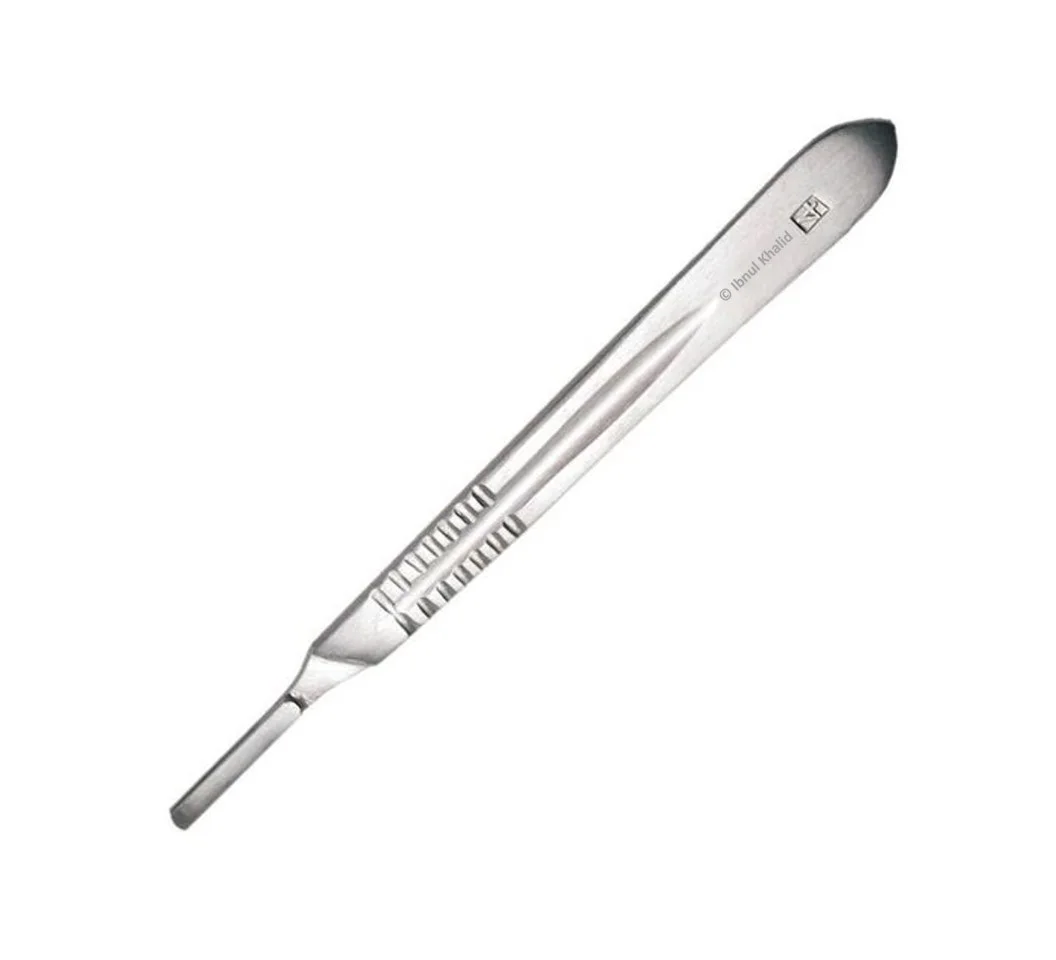
| Length | 15 cm (Approx.) |
| Width | 1.5 cm (Approx.) |
| Height | 0.4 cm (Approx.) |
| Shape | Straight |
| Material | Stainless Steel |
| Use Case | General Surgery, Dissection, Orthopedic, Autopsy |
| Sterilization | Autoclave Compatible |
What Does Scalpel Handle No 4 Refer To?
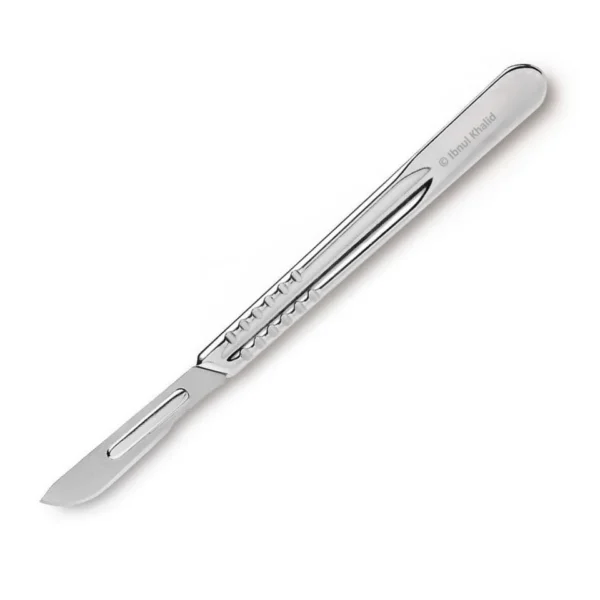
A Scalpel Handle No 4 is an instrument meant for clutching and supporting scalpel blades numbered between 20 and 25. The design of this particular handle includes a flat tip that has a tight slot so that the blade will not move around during dissection or surgery. It is particularly suitable for use in general cutting open things, cutting into bodies, cutting bones (orthopedics), and postmortem examinations where deep cutting may be required, and thus larger blades are needed for the same.
In which areas is it Commonly Used?
The areas where Scalpel Handle No 4 is widely used include but are not limited to the following:
- General Surgery: In major operations requiring deep incisions.
- Dissection: It is perfect for anatomy lessons and cutting up corpses.
- Orthopedic Surgery: Essential in orthopedic surgeries involving meticulous cuts on bones.
- Autopsy & Forensic: Instrumental when carrying out postmortems.
Who Uses Scalpel Handle No 4?
Users of the Scalpel Handle No. 4 are many and include;
- Surgeons: It helps them make accurate cuts during surgeries.
- Medical Students: They require it for anatomical dissections.
- Pathologists & Forensic Experts: These professionals use it during postmortem checks and forensic analysis.
- Veterinarians: Especially in operating on big animals
Why Opt For Scalpel Handle No 4?
- Accommodates Blade Numbers 20-25: Suitable for all kinds of surgeries.
- Made Of Stainless Steel: Long-lasting, non-corrosive, and can be sterilized in an autoclave.
- Designed With An Ergonomic Grip: Enhances handling ease and provides comfort throughout procedures.
- It Can Be Reused And Kept Clean: Sterilization does not compromise its usability; hence, one can reuse it severally after sterilizing.
How Do You Operate With Scalpel Handle No 4?
To use a scalpel handle number four follow these steps:
- Attach the Blade: Slide in the selected blade ’till locked using numbers twenty through twenty-five on the outer edge of the blade handle as reference marks only!
- Perform Procedure: Ensure that you hold onto the instrument properly to make controlled cuts with ease
- Remove Blade Safely: Employ a suitable blade remover or fine-tipped tweezers when taking out blades from slots without causing injuries to yourself or others around you who may be present at that particular time moment
- Sterilize: Make sure to autoclave or disinfect before using again
You can find out more about this product on Facebook, Pinterest, or Wikipedia.
Also, Check Out Our More Scalpel Handles Here.
Frequently Asked Questions:
Q 1. What is the difference between Scalpel Handle No. 3 and No. 4? |
|---|
| A 1: Scalpel Handle No. 3 holds No. 10–15 blades (smaller incisions), while No. 4 holds No. 20–25 blades (deeper cuts). |
Q 2. Can Scalpel Handle No. 4 be sterilized? |
| A 2: Yes, it is made of stainless steel and can be autoclaved or chemically disinfected for reuse. |
Q 3. Is Scalpel Handle No. 4 suitable for dental surgery? |
| A 3: No, dental procedures typically use smaller handles like Scalpel Handle No. 3 for finer cuts. |
Q 4. Which surgeries require Scalpel Handle No. 4? |
| A 4: It is used in general surgery, orthopedic procedures, forensic autopsies, and large-animal veterinary surgeries. |
Reviews
Clear filtersThere are no reviews yet.